Geotechnical laboratory testing forms the backbone of safe and cost-effective construction across North Texas. In Dallas, the 'Laboratory' category encompasses a suite of standardized tests performed on soil and rock samples to determine their physical, mechanical, and chemical properties. These analyses are not merely academic exercises; they provide the essential design parameters that structural engineers use to calculate bearing capacity, predict settlement, and design earth retention systems. From the expansive clays of the Eagle Ford Formation to the alluvial sands of the Trinity River floodplain, understanding what lies beneath the surface through rigorous lab work is the first step in mitigating the region's notorious foundation challenges.
The local geology of Dallas presents a uniquely challenging environment that makes comprehensive laboratory testing indispensable. The city is largely underlain by the Cretaceous-age Eagle Ford Shale and the overlying Austin Chalk, formations that weather into highly plastic, expansive clays. These soils undergo significant volume changes with seasonal moisture fluctuations, a primary driver of foundation distress in the metroplex. A standard visual classification is entirely insufficient. Tests like the Atterberg limits analysis are critical here, as they precisely quantify the liquid limit and plasticity index, directly correlating to a soil's expansion potential. Without this data, designing a slab-on-grade foundation that can withstand Dallas's wet-dry cycles is a gamble.
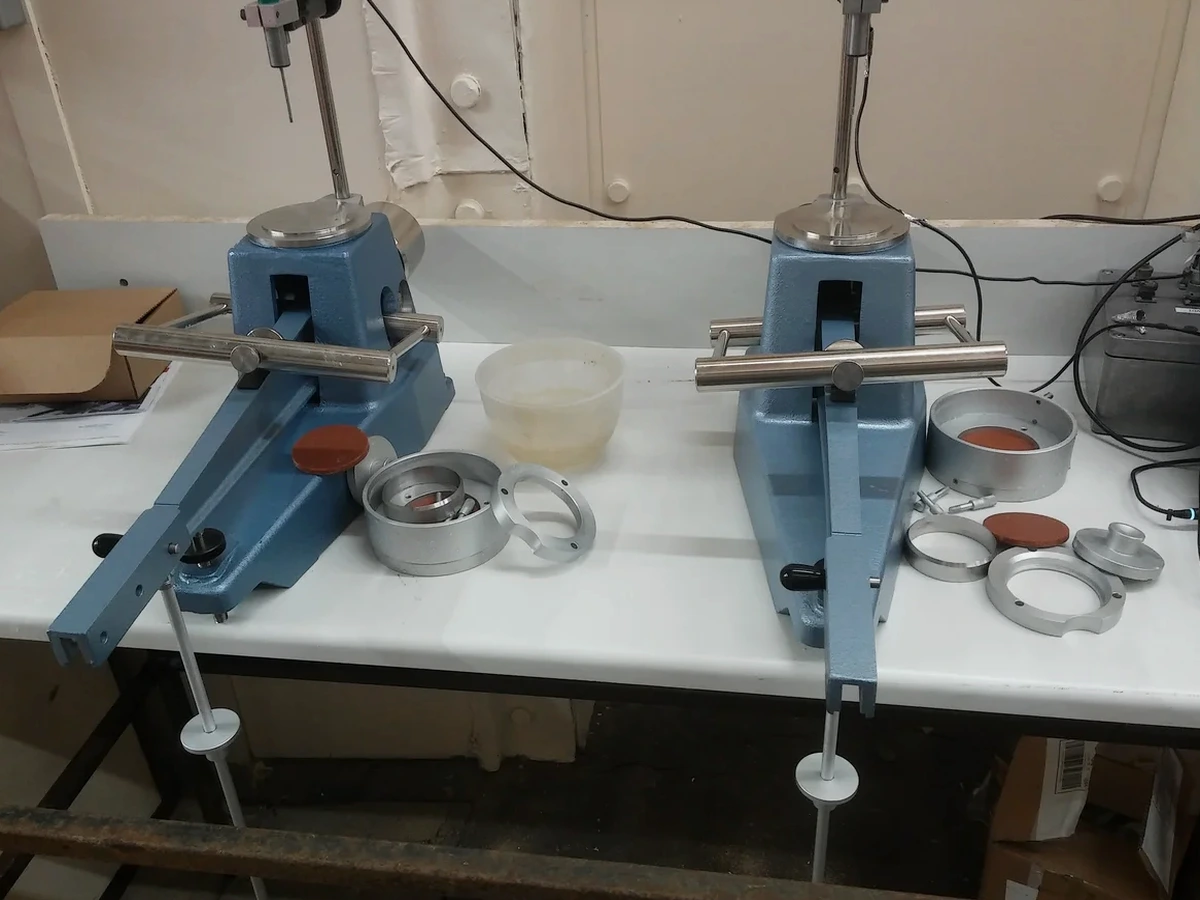
Regulatory adherence is a non-negotiable aspect of any geotechnical investigation in the United States, and Dallas is no exception. All laboratory procedures must conform to the standards set forth by ASTM International, which are universally referenced in local building codes and project specifications. For instance, a grain size analysis (sieve + hydrometer) is performed in strict accordance with ASTM D422 and D7928 to ensure accurate particle distribution curves. Similarly, Atterberg limits testing follows ASTM D4318. These standards guarantee that data is reproducible, legally defensible, and accepted by City of Dallas permitting officials, who rely on these certified lab results to approve foundation designs and verify compliance with the International Building Code (IBC) as adopted locally.
The scope of projects requiring Dallas-based laboratory services is vast. High-rise developments in Uptown and Deep Ellum demand sophisticated triaxial and consolidation testing to design deep foundations that can bypass problematic surface soils. Conversely, large-scale infrastructure projects like the expansion of the LBJ Freeway or new residential subdivisions in Frisco and McKinney lean heavily on basic index testing. A complete grain size analysis is fundamental for assessing the suitability of fill materials and designing drainage layers. Meanwhile, determining the Atterberg limits of subgrade soils is the standard method for predicting pavement performance and selecting appropriate stabilization techniques, ensuring that roads and parking lots can endure North Texas's temperature extremes without premature cracking.
Common questions
Why is laboratory testing mandatory for most construction projects in Dallas?
Dallas is underlain by expansive clays that can severely damage foundations if not properly characterized. Laboratory testing is legally required to comply with the locally adopted International Building Code and ASTM standards. City permitting offices will reject plans lacking certified lab data on soil properties like plasticity and gradation, making these tests a non-negotiable prerequisite for obtaining construction approvals.
What is the difference between field classification and certified laboratory testing?
Field classification by a geologist is a visual, qualitative estimate of soil type. Certified laboratory testing provides quantitative, legally defensible data under controlled conditions. For example, a field log might note 'sandy clay,' but only lab-performed Atterberg limits and grain size analysis can yield the exact plasticity index and particle size distribution curve that engineers require for precise foundation and pavement design calculations.
How do local soil conditions in Dallas influence the type of lab tests required?
The prevalence of the Eagle Ford Shale formation creates highly plastic, expansive soils. This makes index property tests like Atterberg limits absolutely essential for any project. Additionally, the presence of alluvial deposits near the Trinity River requires careful grain size analysis to assess liquefaction potential and drainage characteristics, directly influencing the selection of appropriate foundation systems and earthwork specifications.
How long does a standard geotechnical laboratory testing program typically take to complete?
The duration varies with project scope and soil type. Basic index tests like a sieve and hydrometer analysis or Atterberg limits can often be completed within 3 to 5 business days after sample receipt. However, advanced tests such as consolidation or triaxial shear, which are common for high-rise projects in Dallas, require longer saturation and loading stages and may take one to three weeks to finalize.